
Zum Hauptinhalt springen

Three years of treatment, a job that kept going:
what fertility benefits really change.

Interview conducted in German, translated into English.

The view from the other side: an employee at Merck describes her path to parenthood alongside work - from the conversation with her manager to the fully anonymous benefit claim and her decision to return after parental leave.

Employee story · interview from 15 June 2026 · about 5 minutes read
Anonymised
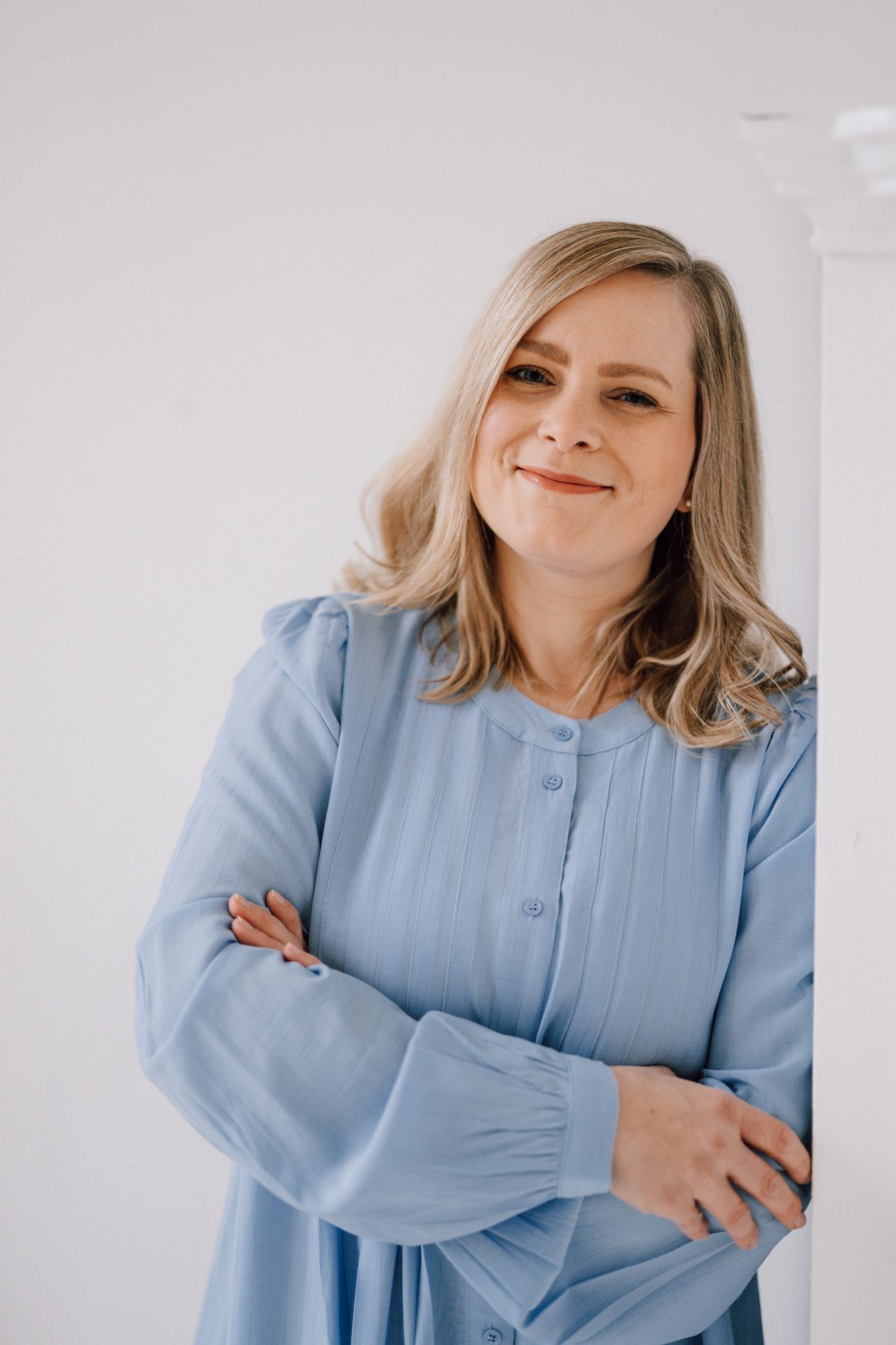
AnonymisedIllustrative photo

The employee

Anonymous

Employee, Merck

Three years on the path to parenthood: two ectopic pregnancies, several IVF and ICSI cycles, hormone treatments and transfers. Alongside it a job that kept going, a team that knew nothing and a manager she told everything. She is now on parental leave; her daughter is nine months old.

This account is anonymised at the employee's request. The company is named with her approval.

Christin Schrörs

The expert

Christin Schrörs

Consultant for Family Building at Work

Formerly Head of People Development, with more than 10 years of experience in a DAX-listed group, today I support companies in recognising fertility and family planning as a topic for their workforce - and in shaping it: from an initial assessment through suitable benefits and offerings to internal communication and manager training.

Context of this account

Three years that stayed invisible on paper

Three years. That is how long the journey took. Two ectopic pregnancies, several ICSI and IVF cycles, hormone treatments, transfers. And alongside it a job that kept going, a team that knew nothing and a manager she told everything. She is now on parental leave; at the time of the interview her daughter is nine months old. And she says it more than once, without hesitating: she is proud to work for this company. This is exactly the perspective missing from most benefit discussions - the view of the people the programme was built for.

The account · Merck

From invisible strain to support that was actually felt

Key facts

Company
Merck
Benefit
Fertility benefit, anonymous reimbursement
Journey
3 years, several IVF and ICSI cycles
Impact
Return after parental leave, stronger loyalty
01

On paper: no limitations

On the outside she delivered. Consistently. Performance reviews stayed strong, absences were rare.

What was not visible: the waiting phases in which concentration was barely possible. The meetings she attended physically while mentally waiting for a phone call. The hospital stay after an ectopic pregnancy - at short notice, one week, without warning.

Working largely from home made much of it easier. Appointments could be fitted in without explanations and without looks.

02

Psychological safety as a precondition

She told her team nothing. Her manager, everything. Not because it was easy, but because the trust was there.

She did not want short-notice absences to be read as unreliability. The psychological safety in that relationship is what made the conversation possible in the first place.

03

Stability as the top priority

During this family-building phase the company went through a reorganisation, which would have opened the door to a new and possibly more senior role.

She deliberately decided against it, because stability mattered more to her at that point in her life.

04

Fertility concerns everyone

During the same period her husband spoke to two colleagues at his company who were going through the same thing. His employer offered no fertility support programme at all.

05

What the fertility benefit meant

She used the fertility benefit. Reimbursement was fully anonymous and independent of her manager, who never learned about it. Her employer also covered costs formally attributed to her partner.

She collected the medication from the pharmacy. The fact that her employer happens to manufacture exactly these products moved her - a quiet connection between the most personal phase of her life and the company she works for. Submitting the claim was straightforward and simple.

What moved her almost more than the benefit itself was the way it was communicated: for all family constellations, explicitly for everyone, regardless of relationship status. As an unmarried couple, they felt explicitly seen for the first time.

„The communication showed me that family really matters here. Not as lip service, but as a genuine offer for everyone."

Employee, Merck · anonymised
06

The support around it

The company ran anonymous expert webinars on fertility, with no names or video from participants. She used them. Free coaching was also available through the EAP, which she chose not to use.

„Just knowing that these options were there gave me a good feeling."

Employee, Merck · anonymised
07

What this means for the company

Asked whether her employer could have done anything more to support her on the way to starting a family, she says no. Her experience was positive throughout.

Her loyalty grew. She could have moved on after parental leave, as many women do. She is not doing that.

All the support on the way to her child has left her feeling connected to her employer - and she is looking forward to going back.

What companies can take from this account

Strain is invisible - metrics do not show it

Strong performance reviews and low absence rates do not mean everything is fine. Support that only starts once absence becomes visible is systematically too late.

Psychological safety decides the impact

The conversation with her manager was possible because trust existed. Without that safety, any benefit goes unused - enabling managers is part of the programme, not an add-on.

Anonymous reimbursement is a quality marker

That the claim ran independently of her manager and without disclosure was a key reason she used it. Process design matters as much as the size of the subsidy.

Inclusive communication beats the amount

Explicitly opening the benefit to all family forms and relationship statuses moved her more than the benefit itself. Inclusive language is the part that lands.

Include partners and men

Fertility is a couple's issue. Her employer also covered costs attributed to her partner - his employer offered nothing, even though several colleagues were affected.

The effect shows in return rates

She could have left after parental leave and is staying. Fertility benefits pay off exactly where retention gets expensive: experienced women in the family-building phase.

Same company, different perspective

The HR interview on the rollout

How the programme came about, which stakeholders had to be convinced and how the benefit package was designed.

For HR and benefits leaders

Impact happens where
employees feel safe enough to speak.

I help companies design fertility benefits that land in everyday work - medically sound, culturally fitting and clearly communicable. If questions are piling up on your side, let's talk about your starting point.

30 minutes · no obligation · for HR and benefits leaders

DAX experience
Systemic expertise
Clinic network
Benefit strategy