Interview: Fertility Benefits
at Merck
In conversation with
Maggie Lester
Employee Benefits, Merck KGaA, Darmstadt
Interview
Christin Schrörs, expert for Family Building at Work
Interview conducted in English and translated into German.
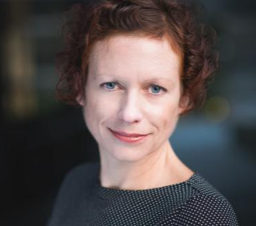
Executive Profile
About Maggie Lester
Employee Benefits, Merck KGaA, Darmstadt
Maggie Lester is a remuneration specialist with over 20 years' international experience working for both consultancies and multinationals, in the UK, France, Switzerland, Japan and Hong Kong. She currently heads up employee benefits for Merck Group KGaA, Darmstadt, Germany, covering over 62,000 employees across 82 jurisdictions. Previous roles include Meta, HSBC (Asia Pacific) and Reuters.
Maggie has always been passionate about designing and delivering innovative solutions that deliver both employee value and fiscal benefits for organisations. She believes that Diversity & Inclusion is a business case, and that a company's benefits define their position. She holds a BSc in Economics from the University of Bristol in the UK, and an MBA for Executives from INSEAD.
- 20+ years
- international experience
- 62,000
- employees
- 82
- jurisdictions
- Employee Benefits
- at Merck
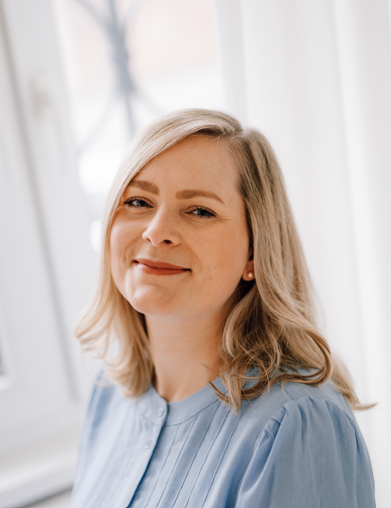
Interview by
Christin Schrörs
Expert for Family Building at Work
Formerly Head of People Development, with more than 10 years of experience in a DAX-listed group, today I support companies in recognising fertility and family planning as a topic for their workforce - and in shaping it: from an initial assessment through suitable benefits and offerings to internal communication and manager training.
If you are wondering what this stage of life means for your company and where to start, we will map out your starting point in a short call - concrete and with no obligation.
30 minutes · no obligation · for HR and benefits leaders
How it started at Merck
Take me back to the start - how did the fertility benefit come about at Merck?
Soon after I arrived at Merck, a company that contributes to around half of IVF procedures globally, I was asked to get involved with the proposed fertility benefit project. The Board had approved this in principle quite some time before and the Head of Reward asked me to bring my experience to making sure that it landed well, and soon. It's business-driven at this point. And this is where it gets interesting, and why we're keen to share our story.
As a company that produces fertility medication, our employees were reaching out to their colleagues in the fertility business and asking for help. The fertility business had gone through a number of steps to support colleagues. They had set up a help desk. They had set up a peer-to-peer counselling arrangement. They even funded external fertility experts for employees to book for a 30 min first discussion.
And it's why this is really interesting: if you operate in another sector, you have no idea of the number of your employees who are going through this. Whereas we could see that this was a really big issue for our employees. We had a number of country heads who had investigated providing our fertility medication to our employees at cost price - in most countries this isn't legal.
So the impetus came bottom-up, from employees, before it ever reached the Board?
You could say that, yes. It was employees reaching out to the fertility business for their personal health, that then meant that the fertility business asked whether we could just put in place a global fertility benefit. And so it was the business that then took it to the Board.
Why it is a business issue
You have been through fertility treatment yourself. How much does that personal experience shape the way you approach this?
My children were through IVF. It was a long journey, and it took a long time and a lot of money. It gives me a lot of empathy and understanding of the complications of this, and the feeling of unfairness when you're not someone who falls pregnant naturally.
In Germany the reflex is still: it's private, not a business matter - and people get pregnant eventually, so why pay? What tipped it into a business decision for Merck?
It's emotionally, physically and financially draining. We can't fix the emotional or physical, but we can support the financial. If people stop treatment because they can't afford it, that emotional cost is serious.
As most large multinationals, our US medical has included fertility coverage under the medical plan for over a decade, so the US data is really helpful for modelling behaviours and address concerns about cost.
As need rises, restrictions for access to public treatment have tightened in many countries. Some women pause their careers for treatment. There's a massive global unmet need, and most of that is driven by the high cost. This includes our employees.
Most people I speak to have come across this somewhere in their own circle, so the human side lands quickly. Where they still hesitate is whether it's really a business matter or a private one. Put like that, how do you see this?
It's not purely one or the other. There are a number of reasons why companies provide employee benefits. Private medical insurance, for example, is used to attract staff and to allow convenient, faster treatment. But it also has the business benefit of enabling staff to focus on their role by resolving medical concerns more quickly. An employee who is struggling to build their family, who cannot afford to access fertility treatment, is unlikely to be performing their best in their role at work. By supporting our employees, we believe we are also enabling our teams and businesses to perform at their best.
Here's the objection I hear most: Merck produces fertility medication, so of course it supports fertility benefits - but that logic doesn't transfer to anyone else. How do you answer that?
I'd turn it around. We didn't do this because we make the medication - we did it for the same reason any employer provides private medical insurance: and one of those reasons is so people can take care of their health and bring their focus to work. Being close to the field simply made it easier for us to see the need. The business case itself is exactly the same for a company that has nothing to do with fertility.
The business case itself is exactly the same for a company that has nothing to do with fertility.
What Germany underestimates
What surprised you when you rolled this out in Germany?
One of the really interesting points for us was that in Germany the clear view was that this was unnecessary, because the coverage was great already. So Germany was one of the few countries where we actually ended up spending more than we expected. That was only because the amount we expected had been impacted by the perception that existing coverage was comprehensive.
That matches what I see in practice. Statutory insurance in Germany reimburses only 50 percent of the first three attempts, for married couples, with age limits of 25 to 40 for the woman and 25 to 50 for the man - everyone else pays out of pocket.
And from the clinics I work with, I hear how many women come in for egg freezing at the end of their 30s, when it is often already too late.
As first-time motherhood shifts later, the gap between the children people want and the children they actually have keeps widening. In the UK this is common ground; in Germany it is still a blind spot.
This was a personal observation for me too - that as my eldest reached 10 years, I was being invited to 50th birthday parties. That the professional women I'd connected with at the school gates, university educated, had not started to consider having children until their mid- to late 30s. And if you find you don't get pregnant easily in your late 30s, you need IVF at 39, at 40, and you fall outside the German system. The age restriction for public financial support or access to fertility treatment varies from country to country, but 40 is quite a common limit for the woman. Germany also has the requirement for the couples to be heterosexual and married, for public support, and a lot of people are finding themselves excluded because of this.
You said Germany surprised you - the need was bigger than the model assumed. How big did that gap turn out to be in the end, and what should it tell a German employer who still believes 'we're covered here, this isn't our problem'?
The monetary amount was not material - we have still come in within our budgeted expectations, globally. But there is a clear need for financial support in Germany and employees appreciate having an employer that sees the whole employee, and provides that comprehensive care.
Beyond the money
Most German companies won't start with a financial benefit - they sit far from the topic, unlike Merck. So the transferable question is: beyond reimbursement, what else do you offer, and what moves the needle most?
Merck did initially consider global providers such as Carrot, Maven, Progyny, and Apryl but for multiple reasons decided to run it internally. That required us to ask what else a provider would offer beyond reimbursements, so we could also provide emotional and mental-health support. We engaged with the providers of our employee assistance programmes (EAPs) and ensured they could support fertility counselling appropriately. A major focus was mental health. We also partnered with Fertility IQ (now InflectionIQ), who create brilliant local language resources (including German-language videos) around fertility topics. These include “how to” guides, “questions to ask at a first fertility appointment” but also much more focused tools around LGBTQI access and ethnicity. These videos help employees start, prepare questions for fertility consultants, and decide whether to continue. We also built an internal page with fertility questions and offered multi-format options such as readings and videos.
The cost, and where to start
For a German company that is just discovering family building as a new topic for its employees: what is the first meaningful step you'd recommend?
One of the important points is that you do it for all employees and their partners. This supports men as much as women. We initially set a country specific financial cap, but have since removed this. I think any level of financial support you can offer is the place to start and will be hugely appreciated.
When a company weighs this up, one of the first worries is scale: how many employees actually take it up in a given year, and what does that use typically look like?
All the US data I've seen (based on c.10 years, and this is wider than Merck) is that annual usage is around 1-2% of employees with the very large part of that being small costs. A small percentage of that population goes on to a fertility cycle (IVF, egg freezing, etc.). The number of people that undergo more than one cycle is really very tiny indeed.
Figures from the interview
1-2 %
of employees use the benefit per year
4.13 / 5
rated as a positive signal of Merck's culture
3.88 / 5
recruiters confirm it strengthens the employer brand
40+ countries
in which claims have already been made
Culture, confidentiality and managers
The process of financial reimbursement of fertility treatment cost is confidential, but how do you make sure that people who open up don't pay for it in their careers - in how managers see them, in who gets promoted?
Confidentiality is essential and we put a lot of effort into building that into our reimbursement system. The big win for us is the cultural change - providing this financial support makes it clear that we support employees going through this really tough moment in their lives and we want our culture and their colleagues to reflect that. However a woman gets pregnant, she will take some time off around the birth - our financial support for fertility underlines our caring culture.
This shows how what you do shapes what's acceptable to discuss, the corporate environment and culture. It signals a cultural marker: we value our “whole” employees with their diverse experiences. It makes business sense and strengthens culture, which in turn improves business outcomes.
The big win for us is the cultural change.
Measuring success, and what comes next
Before we close - what matters most to you that we haven't touched?
We've had claims in over 40 countries now. And that, to us, is the marker of success. You could very easily announce this benefit and make it so difficult to claim that it didn't support any employees. We've actually succeeded in delivering on the ground, as well as it being a great message, highlighting this as a cultural marker for who we are.
Beyond the claims themselves, do you have any evidence that it actually pays back - for instance in how people see Merck as an employer?
We supported an academic survey of over 2,600 candidates, along with their recruiters. We wanted to know whether awareness of the fertility benefit was read as a positive signal of Merck's culture - and, crucially, whether that held not only for those likely to use it, but for all candidates. It did: candidates rated it 4.13 out of 5 as a positive signal, even those who would not use it themselves. Our recruiters confirm, at 3.88 out of 5, that it strengthens Merck's employer brand overall. It shapes who applies and how likely they are to accept an offer - this is the clear, empirical business impact we expected.
To a German HR leader who sees the point but is hesitating - too new, too private, too expensive - what's the one thing you'd want them to hear?
If you're hesitating, remember this isn't anything special - it's the same benefits logic you already apply elsewhere. And the first time a colleague comes back from parental leave with the family they'd almost given up on, you'll know it was worth it.
This isn't anything special - it's the same benefits logic you already apply elsewhere.
About the interviewee: Maggie Lester
You've spent 25 years in international employee benefits. How did you come to treat inclusive benefits as a business lever rather than a nice-to-have?
Like many working in this area, I started my career on retirement schemes as these are such large costs and risks for a company. In the last decade, a focus grew on making insured benefits such as medical more inclusive. And then I started to see the strong role of diversity and inclusion in signalling a company's culture. A company can't just say that it is LGBTQI-friendly, that must also be the employee's experience wherever they are employed in the world, and whether they are part of that community or an ally. That gap has become central to my work. It broadens the recruitment pool and makes you an employer of choice - including communities where there is amazing talent. Psychologically safe, diverse spaces yield broader discussions, better products and stronger more highly performing companies.
For HR, benefits and leadership
Family Building at Work
- where does your company stand?
In 30 minutes we map out your starting point: where your company stands today, which building blocks make sense and what a realistic first step looks like.
30 minutes · no obligation · for HR and benefits leaders